Lockheed Martin and Venus Aerospace Collaborate to Advance Propulsion for Long Range Precision Fires
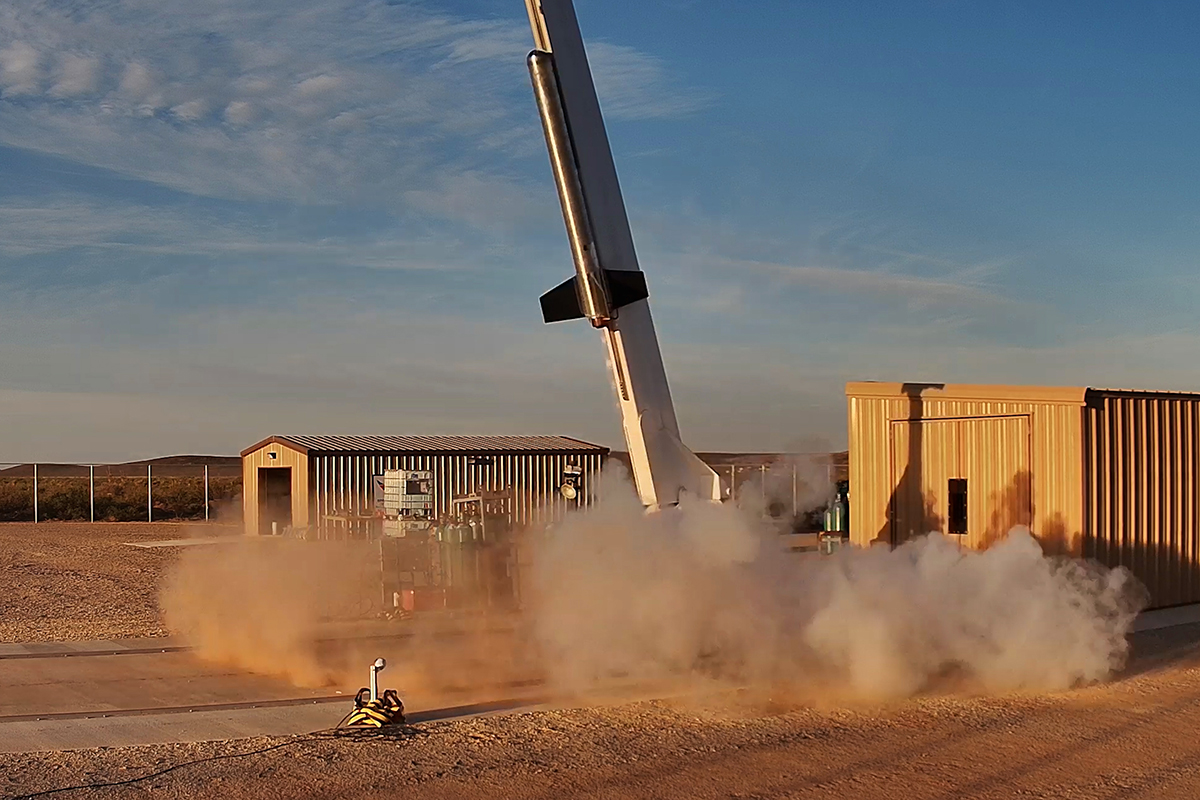
Venus Aerospace announced a joint technology development agreement with Lockheed Martin to advance its flight-tested rotating detonation rocket engine (RDRE) technology for precision fires applications.
The collaboration will support Lockheed Martin’s evaluation of Venus’ RDRE-based booster architecture for precision fires, including system-level work tied to the company’s ongoing test campaign. The effort marks a step toward bringing a new propulsion architecture into defense systems where the ability to reach farther can change mission outcomes.
Range remains one of the defining constraints in precision fires. Extending it often means accepting tradeoffs in size, payload, cost and production complexity. Venus is developing RDRE technology to change those tradeoffs through a more efficient engine architecture.
Unlike traditional rocket engines, which rely on subsonic combustion, an RDRE uses controlled detonation waves to generate thrust. That faster, more efficient burn can produce more power from a simpler engine architecture. For precision fires, that efficiency can translate into longer ranges and high-speed capabilities. For defense more broadly, it creates a new propulsion path for systems that need to move faster, reach farther and be produced at scale.
“Defense customers are asking for more than incremental gains from legacy propulsion,” said Sassie Duggleby, co-founder and CEO of Venus Aerospace. “Our RDRE technology offers a different propulsion architecture for systems that need more range, more speed and a realistic path to production. This agreement with Lockheed Martin moves our breakthrough closer to real precision fires applications.”
Venus completed the world’s first successful flight test of a high-thrust RDRE in May 2025, demonstrating the technology in flight after decades of living in academic theory. Venus is now advancing the technology toward system-level applications where performance, manufacturability and cost directly shape mission capability.
"Lockheed Martin is focused on rapidly delivering advanced capabilities that strengthen deterrence and provide decisive advantages for the warfighter," said Tim Cahill, president, Lockheed Martin Missiles and Fire Control. "Our collaboration with Venus Aerospace allows us to evaluate a promising propulsion technology and determine how it can be integrated into future precision fires solutions. Efforts like this help accelerate innovation, reduce risk and shorten the path from emerging technology to operational capability."
Venus is building its RDRE architecture as a common propulsion platform for defense and space applications, not a one-off engine for a single mission. Working with Lockheed Martin reflects growing customer interest in moving RDRE technology from flight demonstration toward practical system-level use.
About Venus Aerospace
Venus Aerospace is building next-generation propulsion systems for defense, space, and future high-speed flight. Founded in 2020 and headquartered in Houston, Texas, Venus is developing flight-proven Rotating Detonation Rocket Engine (RDRE) technology designed to deliver greater efficiency, range, and scalability for defense and space missions. Venus’ propulsion systems are designed for domestic manufacturing and mission flexibility across national security and aerospace applications. Venus is backed by Mercury Fund, Lockheed Martin Ventures, Prime Movers Lab, Airbus Ventures, Trousdale Ventures and others. To learn more, visit venusaero.com.
About Lockheed Martin
Lockheed Martin is a global defense technology company driving innovation and advancing scientific discovery. Our all-domain mission solutions and 21st Century Security® vision accelerate the delivery of transformative technologies to ensure those we serve always stay ahead of ready. More information at lockheedmartin.com.
Media Contact
press@venusaero.com
Venus Aerospace announced a joint technology development agreement with Lockheed Martin to advance its flight-tested rotating detonation rocket engine (RDRE) technology for precision fires applications.
The collaboration will support Lockheed Martin’s evaluation of Venus’ RDRE-based booster architecture for precision fires, including system-level work tied to the company’s ongoing test campaign. The effort marks a step toward bringing a new propulsion architecture into defense systems where the ability to reach farther can change mission outcomes.
Range remains one of the defining constraints in precision fires. Extending it often means accepting tradeoffs in size, payload, cost and production complexity. Venus is developing RDRE technology to change those tradeoffs through a more efficient engine architecture.
Unlike traditional rocket engines, which rely on subsonic combustion, an RDRE uses controlled detonation waves to generate thrust. That faster, more efficient burn can produce more power from a simpler engine architecture. For precision fires, that efficiency can translate into longer ranges and high-speed capabilities. For defense more broadly, it creates a new propulsion path for systems that need to move faster, reach farther and be produced at scale.
“Defense customers are asking for more than incremental gains from legacy propulsion,” said Sassie Duggleby, co-founder and CEO of Venus Aerospace. “Our RDRE technology offers a different propulsion architecture for systems that need more range, more speed and a realistic path to production. This agreement with Lockheed Martin moves our breakthrough closer to real precision fires applications.”
Venus completed the world’s first successful flight test of a high-thrust RDRE in May 2025, demonstrating the technology in flight after decades of living in academic theory. Venus is now advancing the technology toward system-level applications where performance, manufacturability and cost directly shape mission capability.
"Lockheed Martin is focused on rapidly delivering advanced capabilities that strengthen deterrence and provide decisive advantages for the warfighter," said Tim Cahill, president, Lockheed Martin Missiles and Fire Control. "Our collaboration with Venus Aerospace allows us to evaluate a promising propulsion technology and determine how it can be integrated into future precision fires solutions. Efforts like this help accelerate innovation, reduce risk and shorten the path from emerging technology to operational capability."
Venus is building its RDRE architecture as a common propulsion platform for defense and space applications, not a one-off engine for a single mission. Working with Lockheed Martin reflects growing customer interest in moving RDRE technology from flight demonstration toward practical system-level use.
About Venus Aerospace
Venus Aerospace is building next-generation propulsion systems for defense, space, and future high-speed flight. Founded in 2020 and headquartered in Houston, Texas, Venus is developing flight-proven Rotating Detonation Rocket Engine (RDRE) technology designed to deliver greater efficiency, range, and scalability for defense and space missions. Venus’ propulsion systems are designed for domestic manufacturing and mission flexibility across national security and aerospace applications. Venus is backed by Mercury Fund, Lockheed Martin Ventures, Prime Movers Lab, Airbus Ventures, Trousdale Ventures and others. To learn more, visit venusaero.com.
About Lockheed Martin
Lockheed Martin is a global defense technology company driving innovation and advancing scientific discovery. Our all-domain mission solutions and 21st Century Security® vision accelerate the delivery of transformative technologies to ensure those we serve always stay ahead of ready. More information at lockheedmartin.com.
Media Contact
press@venusaero.com